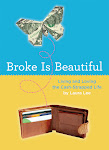
Sunday, March 11, 2012

Quote of the Day: Massaging Money

"I have nothing against investment banking, but it's like massaging money rather than creating money. If you're in physics, you create inventions, you create lasers, you create transistors, computers, GPS."  If you're an investment banker, on the other hand, "you don't create anything new. You simply massage other people's money and take a cut."

-Michu Kaku quoted in the Wall Street Journal

Wednesday, February 29, 2012

Irony About Our Wealth Purity Codes

In my last entry I wrote about the purity codes of biblical times and how they still seem to be in operation when it comes to our view of the wealthy and the poor.  "Being wealthy does not automatically make a person 'pure' but it gives the person the assumption of purity.  A rich person is assumed to be clean, well mannered, smart and moral until proven otherwise. A poor person, on the other hand, lives with the assumption of 'impurity.'  He is assumed to be unintelligent, less capable, unclean and less moral until proven otherwise."  (Thus we have politicians recommending drug testing for welfare recipients.)

A follow up to this comes from a story in today's Bloomberg.  Researchers have found, in contrast the the assumption of purity, that the rich are more likely to cheat, lie and steal.  According to Paul Piff:

“A $50 prize is a measly sum to people who make $250,000 a year,” he said in a telephone interview. “So why are they more inclined to cheat? For a person with lower socioeconomic status, that $50 would get you more, and the risks are small.”

Poorer participants may be less likely to cheat because they must rely more on their community to get by, and thus are more likely adhere to community standards, Piff said. By comparison, “upper-class individuals are more self-focused, they privilege themselves over others, and they engage in self- interested patterns of behavior,” he said. 

Friday, February 10, 2012

Poverty and Purity Codes

This is a graphic that has been going around Facebook.  It shows the results of a Florida program that requires welfare recipients to pass a drug screening in order to qualify for benefits.  According to the graphic, 98% of those tested passed.  The program cost taxpayers $ 178 million.  The big tax savings to the state of throwing the drug users off welfare was $60,000.

The graphic made me wonder: If we were to require drug testing of wealthy people in order to qualify for oil subsidies, or a lower tax rate on capital gains than earned income, what would the graphic look like?  What percentage would fail the test and what would the savings look like?  Is it possible that a larger percentage of capital gains beneficiaries might be using drugs (cocaine on their yachts) than single mothers with minimum wage jobs do?  Is is possible that because of the amount of income involved that the tax savings might actually outweigh the program cost?

I was recently reading the book Meeting Jesus Again for the First Time by Marcus Borg.  Borg spoke about the purity code that operated in Jesus's time (which Jesus violated and protested by eating with tax collectors and the unclean).  The purity code went beyond a few rituals.  It provided an entire social and political system based on the notion of pure and impure, clean and unclean.

According to one purity map of the time, priests and Levites (both hereditary classes) come first, followed by “Israelites,” followed by “converts” (Jewish persons who were not Jewish by birth). Further down the list are “bastards,” followed by those with damaged testicles and those without a penis. Women who were made unclean monthly were low on the social scale. Behavior also played a role and certain occupations, such as tax collecting, made one an outcast.

So by now you're probably wondering what all of this ancient history has to do with Florida drug testing.  It is this.  To quote Borg:

"The purity contrast also was associated with economic class. To be sure, being rich did not automatically put one on the pure side (and first-century Judaism could speak of rich people who were wicked), but being abjectly poor almost certainly made one impure."

When I read this line it occurred to me that our society still operates on this type of a purity code.  Being wealthy does not automatically make a person "pure" but it gives the person the assumption of purity.  A rich person is assumed to be clean, well mannered, smart and moral until proven otherwise. A poor person, on the other hand, lives with the assumption of "impurity."  His is assumed to be unintelligent, less capable, unclean and less moral until proven otherwise.

So why doesn't anyone suggest drug testing in order to qualify for oil subsidies?  How far would such an idea go if someone proposed it?  What types of government funding and services should you have to prove you are moral and ethical to get?

Thursday, January 19, 2012

Representative Democracy Reimagined

I was reading G.K. Chesterton's All Things Considered (which, incidentally, I highly recommend) and I came across this passage:

Allied to this question is the kindred question on which we so often hear an innocent British boast--the fact that our statesmen are privately on very friendly relations, although in Parliament they sit on opposite sides of the House. Here, again, it is as well to have no illusions. Our statesmen are not monsters of mystical generosity or insane logic, who are really able to hate a man from three to twelve and to love him from twelve to three... If our statesmen agree more in private, it is for the very simple reason that they agree more in public. And the reason they agree so much in both cases is really that they belong to one social class; and therefore the dining life is the real life. Tory and Liberal statesmen like each other, but it is not because they are both expansive; it is because they are both exclusive.

Chesterton was writing about early 20th century England, but his observation is every bit as true today.

The New York Times reports that the median net worth of members of Congress is about $913,000 compared to the $100,000 for the general population.

Nearly half the members of Congress are millionaires. In contrast, only five percent of the general population has a million or more in the bank. (Or stocks and so on.)

Rather than being a straightforward case of politicians being bought and paid for by lobbyists, they are influenced by what they are exposed to and who they associate with-- other super rich people.

Under the current system, it takes huge boatloads of money to run a political campaign. That guarantees that most of the public will be represented by people from a different socio-economic status than their own.

I began to wonder what would happen if, rather than choosing our representatives geographically, we required them to represent us by tax bracket. After all, doesn't a laborer in California have more in common with a laborer in South Dakota than he has with a millionaire in his own state? Doesn't a Texas oil baron have more in common with a Wall Street billionaire than he has with a waitress in his own state?

What do you suppose our congress would look like if we had an electoral college, not for states, but for socio-economic groupings? What types of laws might we have? How would our national priorities change or would they?

Tuesday, January 17, 2012

Passage of the Day: G.K. Chesterton on Self-Help Books

There has appeared in our time a particular class of books and articles which I sincerely and solemnly think may be called the silliest ever known among men... these things are about nothing; they are about what is called Success. On every bookstall, in every magazine, you may find works telling people how to succeed. They are books showing men how to succeed in everything; they are written by men who cannot even succeed in writing books. To begin with, of course, there is no such thing as Success. Or, if you like to put it so, there is nothing that is not successful. That a thing is successful merely means that it is; a millionaire is successful in being a millionaire and a donkey in being a donkey... I really think that the people who buy these books (if any people do buy them) have a moral, if not a legal, right to ask for their money back...

If you want to succeed at whist, either be a good whist-player, or play with marked cards. You may want a book about jumping; you may want a book about whist; you may want a book about cheating at whist. But you cannot want a book about Success... You may want to jump or to play cards; but you do not want to read wandering statements to the effect that jumping is jumping, or that games are won by winners...

Or suppose that in the course of his intellectual rambles the philosopher of Success dropped upon our other case, that of playing cards, his bracing advice would run--"In playing cards it is very necessary to avoid the mistake (commonly made by maudlin humanitarians and Free Traders) of permitting your opponent to win the game...

Turning over a popular magazine, I find a queer and amusing example. There is an article called "The Instinct that Makes People Rich." It is decorated in front with a formidable portrait of Lord Rothschild. There are many definite methods, honest and dishonest, which make people rich; the only "instinct" I know of which does it is that instinct which theological Christianity crudely describes as "the sin of avarice." That, however, is beside the present point.

-From All Things Considered by G.K. Chesterton

Saturday, January 14, 2012

Fattened Your Hearts in a Day of Slaughter...

Here is one of those Bible passages you don't hear often at "prosperity gospel" churches:

James 5. Come now, you rich, weep and howl for the miseries that are coming upon you. 2 Your riches have rotted and your garments are moth-eaten. 3 Your gold and silver have corroded, and their corrosion will be evidence against you and will eat your flesh like fire. You have laid up treasure in the last days. 4 Behold, the wages of the laborers who mowed your fields, which you kept back by fraud, are crying out against you, and the cries of the harvesters have reached the ears of the Lord of hosts. 5 You have lived on the earth in luxury and in self-indulgence. You have fattened your hearts in a day of slaughter.

Bibles, Crossway (2011-02-09). The Holy Bible, English Standard Version (p. 1013). Crossway.

Thursday, January 12, 2012

Imagine No Posessions

...the Poverelio (Francis’s nickname, which means “little poor man”) believed material possessions to be "evil”; he loved the whole of creation too much to reject any part of it. Francis asked his followers to live in poverty because he believed that such a life—style would release them from self—centered demands for control. "Living without property,” Francis once explained, "means never getting upset by anything that anybody does."

In Saint Francis’s understanding, material poverty creates an emptiness that may then be filled by spiritual reality. In renouncing our claim to possessions, we open ourselves to spirituality because we are also (and this is the more significant act) renouncing our self—will. Francis honored "Lady Poverty" because he believed that being without possessions makes it much less likely that we will insist on our own will the willfulness that becomes the claim to be "God."

Completely unprotected, we discover a new way of seeing: Rather than looking for
what we don’t have, we truly see what we do have. We learn to discern God’s gift in everything that happens to us.

from The Spirituality of Imperfection by Ernest Kurtz and Katherine Ketcham

Wednesday, January 11, 2012

Shopping for Peace of Mind

Socrates believed that the wise person would instinctively lead a frugal life, and he even went so far as to refuse to wear shoes. Yet he constantly fell under the spell of the marketplace and would go there often to look at tl1e great variety and magnificence of the wares on display. A friend once asked him why he was so intrigued with the allures of the market. "I love to go there," Socrates replied, "to discover how many things I am perfectly happy without."
-From The Spirituality of Imperfection by Ernest Kurtz and Katherine Ketcham

Friday, December 30, 2011

Wednesday, November 30, 2011

Thanks a Latte

I subscribe to an e-mail feed with questions from reporters and there is one question that seems to come up a lot. A variant came trough this morning:

Query:

What are some easy, actionable (and accessible) ways that people
can cut back on spending? What are some small steps I can take
(i.e. not ordering a drink with dinner/latte in the morning)
that add up to large savings over time?


What I want to know is who are these people who are ordering lattes every day and scratching their heads about where they can save a couple of bucks? Why is it that reporters are always suggesting cutting out your daily latte as if they are actually telling cash-strapped people something valuable?

Are there any other broke people out there who are a bit sick of the whole "you can get out of your troubles by giving up your latte" line?

Monday, November 21, 2011

Those Deep Ones

"Mr. Darling used to boast to Wendy that her mother not only loved him but respected him. He was one of those deep ones who know about stocks and shares. Of course no one really knows, but he quite seemed to know, and he often said stocks were up and shares were down in a way that would have made any woman respect him."-J.M. Barrie, Peter and Wendy

Saturday, November 5, 2011

Do Big Bonuses Improve Creativity?

If nothing else, having bills to pay can get you off your butt.  After Mickey Spillane, the writer of detective stories, achieved his first big success, he decided to take up residence at a popular seaside resort and enjoy the sunshine.  On the rare occasions he decided to work, the ideas wouldn't come, but he was financially secure, so it didn’t bother him much.

All the while, his bank account was steadily shrinking. Once, some unexpected bills came up and overnight Mickey's financial situation went from comfortable to desperate. Almost immediately, good salable ideas began to percolate in his mind, and out of necessity he wrote one of his best stories and went on to enjoy a long and outstanding career.

While poverty can be a great motivator to get you to work, the promise of extra money when you’re already comfortable can actually stifle creativity.  That is the conclusion of Teresa Amabile, the head of the Entrepreneurial Management Unit at Harvard Business School and the only tenured professor at a top business school to devote her entire research program to the study of creativity.  She and her research team collected nearly 12,000 daily journal entries from 238 people working on creative projects in seven companies in the high-tech, chemical and consumer products industries.  She discovered that people are most creative when they are self-motivated and when they care about their work.  But when they start to worry about their bonuses, and pay-for-performance plans, they start to get risk averse.  To “guarantee results” they stick to what has worked before and fail to innovate.

When we are chasing after financial goals, we usually think we are seeking self-improvement.  Yet we’re actually more motivated by a fear of loss than the dream of gain.  Our greatest fear is losing ground.

-Excerpt from the book Broke is Beautiful by Laura Lee

Friday, October 28, 2011

How the Game of Life is Different from Monopoly

Rev. Tony Lorenzen writing in Sunflower Chalice suggests playing two games of Monopoly back to back as a demonstration of how our economic system works.  Play the first with the normal rules and then:
Play a second game of Monopoly. This time... players start the game differently. Player ONE begins the game already owning Boardwalk and Park Place as well as all the Green Properties – all with hotels already on them, all the Railroads, and both utilities... What [some people] wrongly assume is that our society and our world is the first game of Monopoly—that we all start on a level playing field, playing by the same rules with all the same advantages and disadvantages. The reality is that we live in the world of the second Monopoly game. It is not a rigged game so much as we are all born into the game in different circumstances and in different places. That simple fact has much to do with the lack of economic and social justice we experience (or do not experience). . . . Making it and surviving should be something available to everyone everywhere.

Listening to Occupy Wall Street

The founder and president of Capital Institute, John Fullerton, has written an essay on the Huffington Post about what Occupy Wall Street stands for:

William Blake cautioned that abstraction without the particular becomes demonic. As a society, we became intoxicated with the pursuit of money, and then in our stupor, allowed forces emanating from Wall Street to layer abstraction upon abstraction in the name of innovation. This morphed into nothing but leveraged speculation at best, and into manipulation, conflicts of interest, cynicism, cheating, and fraud. I know because I was there at the creation in the 1980s. Back then, these tools were innovative, purposeful and productive. But they have since metastasized into a cancer. Free market fundamentalism blinded us to a timely diagnosis, and continues to do so today.

It is time for finance to resume its proper and humble place as servant to, not master of, the real economy -- an economy that promotes a more equitably shared prosperity while respecting the physical limits of our finite planet. Such transformation is the Great Work of our age; work that drives the Capital Institute and many other organizations fostering the emergence of a new economy. The restoration of our democracy OWS seeks is an essential step, which may be at hand. It's still a long shot, but we shall see. One thing is for certain: OWS has started a national conversation long overdue.

Read the rest at the Huffington Post.

Monday, October 24, 2011

Broke Food: Ramen Sandwich

The blog of the NPR radio show Wait Wait Don't Tell Me today posted a feature on a rather odd food stuff: The Ramen Sandwich. It uses blocks of ramen instead of bread, which the commentators describe as "weirdly tasty if you're able to get it in your mouth."

Sunday, October 2, 2011

A Crisis of Bigness

Interesting article in The Guardian that looks at the economic theory of Leopold Kohr, who argued that "Whenever something is wrong, something is too big."

We have now reached the point that Kohr warned about over half a century ago: the point where "instead of growth serving life, life must now serve growth, perverting the very purpose of existence". Kohr's "crisis of bigness" is upon us and, true to form, we are scrabbling to tackle it with more of the same: closer fiscal unions, tighter global governance, geoengineering schemes, more economic growth. Big, it seems, is as beautiful as ever to those who have the unenviable task of keeping the growth machine going.

Worth a read in full.

Monday, September 26, 2011

From the Starving Artists File

"The financial success of an author is inversely proportional to the literary worth of the book. Take the authors of the Bible. Those garment-rending saps ate cockroach dung in caves in the Gaza desert and scrawled tortured epiphanies on papyrus before being stoned to death or dying of plagues. Or Herman Melville, who barely staved off debts by assessing tariffs on crates of imported wool in New York Harbor for twenty years. Meanwhile Pamela McLaughlin, whose books can be read and forgotten in the time it takes for ordered Chinese food to arrive, flies in a private helicopter to the Caribbean island she owns. She named it-- and this is not a joke, I read it in Vanity Fair-- 'Bellissima Haven.'"-Steve Hely, How I Became a Famous Novelist

Saturday, September 17, 2011

Sunday, September 11, 2011

First Church of Bootstrap-lifters, Scientist

Now their propaganda is everywhere triumphant, and year by year we see an increase in the rewards and emoluments of the prophets and priests of the cult. The ground is covered with stately temples of various designs, all of which I am told are consecrated to Bootstrap-lifting. I come to where a group of people are occupied in laying the corner-stone of a new white marble structure; I inquire and am informed it is the First Church of Bootstrap-lifters, Scientist...

the priests of all these cults, the singers, shouters, prayers and exhorters of Bootstrap-lifting have as their distinguishing characteristic that they do very little lifting at their own bootstraps, and less at any other man's. Now and then you may see one bend and give a delicate tug, of a purely symbolical character: as when the Supreme Pontiff of the Roman Bootstrap-lifters comes once a year to wash the feet of the poor; or when the Sunday-school Superintendent of the Baptist Bootstrap-lifters shakes the hand of one of his Colorado mine-slaves. But for the most part the priests and preachers of Bootstrap-lifting walk haughtily erect, many of them being so swollen with prosperity that they could not reach their bootstraps if they wanted to. Their role in life is to exhort other men to more vigorous efforts at self-elevation, that the agents of the Wholesale Pickpockets' Association may ply their immemorial role with less chance of interference.
-Upton Sinclair, The Profits of Religion

Something to Read When You're Down and Out

A couple of weeks ago Flavorwire posted a list of "truly magnificent novels written about the penury and deprivation that can arise in allegedly first-world societies, books that are crushingly depressing but also with a lot to teach about the way our world treats those who have less than we do."

Read the whole list and make some notes for your next library visit.

Saturday, September 10, 2011

Beyond Jobs

Douglas Rushkoff writing for CNN asks whether our problem is really "jobs" or should we instead be re-envisioning our entire social economic structure:

The question we have to begin to ask ourselves is not how do we employ all the people who are rendered obsolete by technology, but how can we organize a society around something other than employment? Might the spirit of enterprise we currently associate with "career" be shifted to something entirely more collaborative, purposeful, and even meaningful?

Instead, we are attempting to use the logic of a scarce marketplace to negotiate things that are actually in abundance. What we lack is not employment, but a way of fairly distributing the bounty we have generated through our technologies, and a way of creating meaning in a world that has already produced far too much stuff.

Friday, September 9, 2011

A Philosophical Look at Amazon's New @Author Program

Amazon has recently launched a new Kindle feature, in Beta, called @author. It allows readers who have a Kindle, to tweet questions to the author directly from within the Kindle platform. When I heard about it I immediately wanted to sign up to be an "@author." Turns out I'm not famous enough. They're just trying it out with a few big wigs for now. People like me are fairly easy to reach at any rate.

It's easy to see why a writer would want to do it though. Most of the time you write a book, it goes out into the world, and you have no idea what anyone thought of it. Hearing from readers would satisfy the natural curiosity of authors.

Nieman Journalism Lab has an article on how Amazon is changing what the book is all about.

I hated much of the tone of this article because it is written in my least favorite language: market speak.

There are a couple points to note here. First, most obviously: @Author represents yet another step in, yep, the personalbrandification of the publishing business — book-wise, news-wise, otherwise. The title of Amazon’s new feature, after all, isn’t @book or @genre or @publishinghouse; it’s @author. The identity of the author herself — as defined and measured and bolstered by her ability to create a community around her content — is, here, itself a kind of product.

Bleech!

Having people who respond to what you write, and who develop and interest in what you might put out, is not "creating brand identification." It's building an audience. In simpler times, what they are calling a "brand," or a "product," Dear Reader, we once called "a reputation."

The idea that readers would connect with authors rather than publishers is nothing new. I venture to say that even in the brick and mortar days of book selling people did not go in looking for a book from their favorite publisher.

My perspective on the whole publishing industry is quite simple: authors and their stories, in whatever form, do not exist to support an industry called "publishing." Publishing is the industry that came into existence to fulfill the desires of readers to have access to literature, to support writers enough so that they could create said literature. The successful business models of the future will be the ones that keep that original mission-- connecting readers to literature.

I do realize that my backwards take on things-- that the money making part of business is a byproduct of making products and services available to society, rather than the other way around-- is probably why I wrote a book called "Broke is Beautiful" and not "How I Became a Millionaire Through My Idealism."

In any case, the Nieman article proposes that this assumption, that the author will continue to be available to the reader after completing the book, changes expectations about what a "book" is about. A book becomes a dialogue, never entirely finished and closed. It seems likely that the ways we conceive of "books" and literature will evolve because of this technology. This is an interesting development and we'll see where it goes.

One potential problem I do see with this "digital commodification of authorship that takes place by way of community and conversation," as the article puts it, is that letting readers ask authors whatever they want, ironically, risks diminishing the role of the reader in the literary process.

Here is what I mean: The writer of a book, especially a fiction book, is only half of the literary equation. Much of the meaning of a book comes not from what the author intended, but what the reader brings to it. There are as many takes on Hamlet and Jane Eyre as there are readers to come into contact with them. The writer might have a strong idea of what a character's motivations are, beyond what is literally present in the text, and the reader might have a different idea. Who is to say that the author's idea is the right one?

Being encouraged to ask the writer limits the role of the reader by bringing the author back in to "settle" some of the questions raised by a book. Sometimes the questions are more interesting than the answers.

Wednesday, September 7, 2011

Not Making Employees Happy Interferes with Your Ability to Use them As Part of Your Machine

I'm all in favor of creating better workplaces that allow employees to be happier, healthier and more engaged with their work. Yet is the only way to frame this argument a financial one? Worker wellbeing is important because our business will earn more if we can keep them well?

The New York Times today ran yet another story about a social value framed entirely in market terms- how do these pesky humans influence our productivity and bottom line?

Here is the premise of today's article Do Happier People Work Harder?
Employee engagement may seem like a frill in a downturn economy. But it can make a big difference in a company’s survival. In a 2010 study, James K. Harter and colleagues found that lower job satisfaction foreshadowed poorer bottom-line performance. Gallup estimates the cost of America’s disengagement crisis at a staggering $300 billion in lost productivity annually. When people don’t care about their jobs or their employers, they don’t show up consistently, they produce less, or their work quality suffers.

This framing has the interesting effect of advocating on behalf of workers while still treating them as cogs in the wheel of corporate machinery, only valuable to the extent that they are increasing profits for the company.

The article speaks from the perspective of owners and managers and asks us to assume that we, the American people, the readers of this article, are the managers rather than the managed. For this most part this is not true. The vast majority of the American public is made up of those unhappy workers, not the managers.

Can't anyone argue that we should try to improve people's quality of life because then they would have a better quality of life?

Monday, September 5, 2011

Happy Capital Day

Washington Post reporter E. J. Dionne, writing for The Moderate Voice, argues that we should just go ahead and change the name of Labor Day to Capital Day.

Imagine a Republican saying this: “Labor is prior to and independent of capital. Capital is only the fruit of labor, and could never have existed if labor had not first existed. Labor is the superior of capital, and deserves much the higher consideration.”

These heretical thoughts would inspire horror among our friends at Fox News or in the tea party. They’d likely label them as Marxist, socialist or Big Labor propaganda. Too bad for Abraham Lincoln, our first Republican president, who offered those words in his annual message to Congress in 1861.

...In scores of different ways, we paint investors as the heroes and workers as the sideshow. We tax the fruits of labor more vigorously than we tax the gains from capital — resistance to continuing the payroll tax cut is a case in point — and we hide workers away while lavishing attention on those who make their livings by moving money around.

Consider that what the media call economics reporting is largely finance reporting... Workers are regarded as factors of production. At best, they’re consumers; at worst, they’re “labor costs” cutting into profits and the sacred stock price...

With the worker disappearing from our media and our consciousness, isn’t it only a matter of time before Labor Day falls off the calendar? As long as it’s there, it should shame us about our cool indifference to the heroism of those who go to work every day.

Read the full article via the link above.

Is Modern Culture One Big Commercial for Consumerism?

Thought provoking article by Justin Lewis on Our Kingdom on the power of advertising when taken collectively.

Advertising has became our dominant creative industry – what Stuart Ewen calls ‘the prevailing vernacular of public address’. It sucks up our talent for art, design, creativity and storytelling. It has become such a routine part of everyday life that we rarely stop to think about its significance.

...the prevailing orthodoxy is to treat each advertisement on its individual merits. The larger question – the cumulative impact of this deluge of commercials - is rarely asked...

For all their diversity, advertisements share one basic value system. Advertisements may be individually innocent, collectively they are the propaganda wing of a consumerist ideology. The moral of the thousands of different stories they tell is that the only way to secure pleasure, popularity, security, happiness or fulfilment is through buying more; more consumption - regardless of how much we already have.

New Form of Ego Surfing for Authors

For my birthday, I got a Kindle ereader. (I have mixed feelings about it. Being able to take a full library on tour with me is a plus. The marketing focus, long term questions of book ownership--could my whole library become technologically obsolete or require an expensive upgrade or repurchase to be read again?-- and the fact that you can push a wrong key and suddenly be in the wrong part of your book are minuses.)

One of its features allows you to see the popular highlights in a book you are reading. I find this distracting, and turned it off. Someone pointed out to me, however, that an author could look up her own books and see what readers had highlighted. Amazon has a web page where you can look up books available for its device and see the highlights in it. A new form of ego surfing for authors!

Only one of my books, Broke is Beautiful, is new enough to have picked up any popular highlights. If the three dudes who highlighted it are taken to be representative, here is the best line in my book:

"When we are chasing after financial goals, we usually think we are seeking self-improvement. Yet we’re actually more motivated by a fear of loss than the dream of gain."

Kind of fun, but to be honest, after writing more than a dozen books, I was hoping the public might have highlighted a few more lines.

Friday, August 26, 2011

Newsflash: The Poor are People

"I’ve learned a lot since I started talking with them. I’m embarrassed now at the assumptions I used to make about them. Without realizing it, I assumed poor people weren’t smart. Or that they weren’t interesting. And that they didn’t know anything about my world. Turns out, it’s not my world. It’s ours. And yes, some of them are obnoxious or weird or mean. But no more so than anyone else. It turns out, poor people are—get this—just people. People who happen to be poor."-Patrick Smith, Losing the Big Coin Toss, The Good Man Project

Deserving of Careful Study

"The connection between deteriorating economic and social conditions and high corporate profitability deserves careful study as does the question of whether this is a stable relationship. Regardless, these charts provide important insight into our national policy-making nexus. As long as our large corporations are prospering we should not expect our political process to produce meaningful change. The problem isnt a lack of good ideas for how to strengthen our economy and generate jobs, it is the lack of interest on the part of our elected leaders — on both sides of the aisle – to seriously consider them. It appears that meaningful economic change will have to await either a further unraveling of our economic and social infrastructure or the rise of a powerful social movement with a new economic vision."-The conclusion of Martin Hart-Landsberg writing in Sociological Images after examining an International Monetary Fund report on the U.S. economy.

History of Debt

There is a fascinating interview with David Graeber author of Debt: The First 5,000 Years on the blog Naked Capitalism which turns a lot of our conceptions about the origin of money on its head and which examines the role and consequences of indebtedness on all aspects of society.  I highly recommend the article.  Here are some highlights:

Money evolving out of barter is a myth.  Rather a sense of indebtedness and mutual responsibility came long before an exact accounting of goods for trade.  


Think about what they’re saying here – basically: that a bunch of Neolithic farmers in a village somewhere, or Native Americans or whatever, will be engaging in transactions only through the spot trade. So, if your neighbor doesn’t have what you want right now, no big deal. Obviously what would really happen, and this is what anthropologists observe when neighbors do engage in something like exchange with each other, if you want your neighbor’s cow, you’d say, “wow, nice cow” and he’d say “you like it? Take it!” – and now you owe him one. Quite often people don’t even engage in exchange at all – if they were real Iroquois or other Native Americans, for example, all such things would probably be allocated by women’s councils.
So the real question is not how does barter generate some sort of medium of exchange, that then becomes money, but rather, how does that broad sense of ‘I owe you one’ turn into a precise system of measurement – that is: money as a unit of account?

The first word for "freedom" in any language was related to freedom from debt.

This was the great social evil of antiquity – families would have to start pawning off their flocks, fields and before long, their wives and children would be taken off into debt peonage. Often people would start abandoning the cities entirely, joining semi-nomadic bands, threatening to come back in force and overturn the existing order entirely. Rulers would regularly conclude the only way to prevent complete social breakdown was to declare a clean slate or ‘washing of the tablets,’ they’d cancel all consumer debt and just start over.
 In Sanskrit, Hebrew, Aramaic, ‘debt,’ ‘guilt,’ and ‘sin’ are actually the same word.

Graeber also concludes that our economic system is at tremendous risk because it does not offer enough protection to debtors.

In the past, periods dominated by virtual credit money have also been periods where there have been social protections for debtors. Once you recognize that money is just a social construct, a credit, an IOU, then first of all what is to stop people from generating it endlessly? And how do you prevent the poor from falling into debt traps and becoming effectively enslaved to the rich? That’s why you had Mesopotamian clean slates, Biblical Jubilees, Medieval laws against usury in both Christianity and Islam and so on and so forth.

Since antiquity the worst-case scenario that everyone felt would lead to total social breakdown was a major debt crisis; ordinary people would become so indebted to the top one or two percent of the population that they would start selling family members into slavery, or eventually, even themselves.
Well, what happened this time around? Instead of creating some sort of overarching institution to protect debtors, they create these grandiose, world-scale institutions like the IMF or S&P to protect creditors. They essentially declare (in defiance of all traditional economic logic) that no debtor should ever be allowed to default. Needless to say the result is catastrophic. We are experiencing something that to me, at least, looks exactly like what the ancients were most afraid of: a population of debtors skating at the edge of disaster.
Although governments and banks are behaving differently at the moment, if we recognize debt as a social agreement, we can change and negotiate the terms.

The UK takes the even weirder position that this is true even of debts the government owes to banks that have been nationalized – that is, technically, that they owe to themselves! If that means that disabled pensioners are no longer able to use public transit or youth centers have to be closed down, well that’s simply the ‘reality of the situation,’ as they put it.


These ‘realities’ are being increasingly revealed to simply be ones of power. Clearly any pretence that markets maintain themselves, that debts always have to be honored, went by the boards in 2008...

When thousands of people begin assembling in squares in Greece and Spain calling for real democracy what they are effectively saying is: “Look, in 2008 you let the cat out of the bag. If money really is just a social construct now, a promise, a set of IOUs and even trillions of debts can be made to vanish if sufficiently powerful players demand it then, if democracy is to mean anything, it means that everyone gets to weigh in on the process of how these promises are made and renegotiated.” I find this extraordinarily hopeful.


A truly interesting read worth checking out in full via the link above. I've also added Debt: The First 5,000 Years to my (overly long) to read list.

Wednesday, August 17, 2011

Soul-Less Use

I was taken with Leo Babauta's column on Zen Habits today.  It is exactly how I feel about the constant mantra of marketing in our culture and in our social media in particular.  Incidentally, I had to click through a message asking if I wanted to monetize my blog with ads before I could post this.
Converting visitors into buyers is a soul-less use of your creative energy. Reject it, out of hand....

Imagine owning a muffin shop. If the muffins are commonplace, you’ll have to advertise and do some “guerilla marketing” to get customers. But if your muffins make people roll their eyes in ecstasy, they will tell the world of your deliciousness, and the world will pound on your muffin-scented door.
Become quiet, find contentedness, become valuable. These trump marketing every time, and as you learn to listen to your inner music, you can now ignore the marketers hawking their oils of snakedness.

Sunday, August 14, 2011

Public Morality: Sex and Violence

You really can't help but click on an article with a title like The Ethics of Lust: Your Dildo May Be Illegal.  The article notes that sex toys are illegal in certain states.  And that in 2009, the Supreme Court of Alabama upheld such a law stating that “public morality can still serve as a legitimate rational basis for regulating commercial activity, which is not a private activity.”

I immediately thought of the Supreme Court decision striking down a California law banning the sale of violent video games to minors without parental consent because it is a violation of the manfacturer's free speech rights.

If public morality can serve as a rational basis for regulating commercial activity, aren't the people of a state as entitled to enact laws that represent their morals regarding violence or are "morals" only related to sex?  I realize that these are two different courts, but the two cases together reveal what a strange culture we have in America.


At Least I'm Not That Guy

During these hard days and hard weeks, everybody always has it bad once in a while. You know, you have a bad time of it, and you always have a friend who says "Hey man, you ain't got it that bad. Look at that guy." And you look at that guy, and he's got it worse than you. And it makes you feel better that there's somebody that's got it worse than you.  But think of the last guy. For one minute, think of the last guy. Nobody's got it worse than that guy. Nobody in the whole world. That guy...he's so alone in the world that he doesn't even have a street to lay in for a truck to run him over.-Arlo Guthrie, The Pause of Mr. Claus


The Economists reports on a new study that suggests that the reason the nearly-poor are less likely to support systems that would raise taxes on the wealthy and favor the less well-off is that they are afraid that greater equality might erode their tenuous advantage over the really poor:

Paradoxically, as the share of the population that receives benefits in a given area rises, support for welfare in the area falls. A new NBER paper finds evidence for an even more intriguing and provocative hypothesis. Its authors note that those near but not at the bottom of the income distribution are often deeply ambivalent about greater redistribution. 
Economists have usually explained poor people’s counter-intuitive disdain for something that might make them better off by invoking income mobility. Joe the Plumber might not be making enough to be affected by proposed hikes in tax rates on those making more than $250,000 a year, they argue, but he hopes some day to be one of them. This theory explains some cross-country differences, but it would also predict increased support for redistribution as income inequality widens. Yet the opposite has happened in America, Britain and other rich countries where inequality has risen over the past 30 years.


Instead of opposing redistribution because people expect to make it to the top of the economic ladder, the authors of the new paper argue that people don’t like to be at the bottom. One paradoxical consequence of this “last-place aversion” is that some poor people may be vociferously opposed to the kinds of policies that would actually raise their own income a bit but that might also push those who are poorer than them into comparable or higher positions. The authors ran a series of experiments where students were randomly allotted sums of money, separated by $1, and informed about the “income distribution” that resulted. They were then given another $2, which they could give either to the person directly above or below them in the distribution.
In keeping with the notion of “last-place aversion”, the people who were a spot away from the bottom were the most likely to give the money to the person above them: rewarding the “rich” but ensuring that someone remained poorer than themselves. Those not at risk of becoming the poorest did not seem to mind falling a notch in the distribution of income nearly as much. This idea is backed up by survey data from America collected by Pew, a polling company: those who earned just a bit more than the minimum wage were the most resistant to increasing it.
Poverty may be miserable. But being able to feel a bit better-off than someone else makes it a bit more bearable.